
Commercial Glass Break Detection
Commercial glass break detection adds another layer of protection to intrusion alarm systems by monitoring vulnerable glass areas that may not be fully protected by door contacts alone.
In offices, retail facilities, warehouses, schools, municipal buildings, healthcare properties, and other commercial environments, windows and glazed entry areas can create potential points of entry. Properly selected glass break detectors can help identify the sound or physical effects of broken glass and generate an alarm condition when the system is armed.
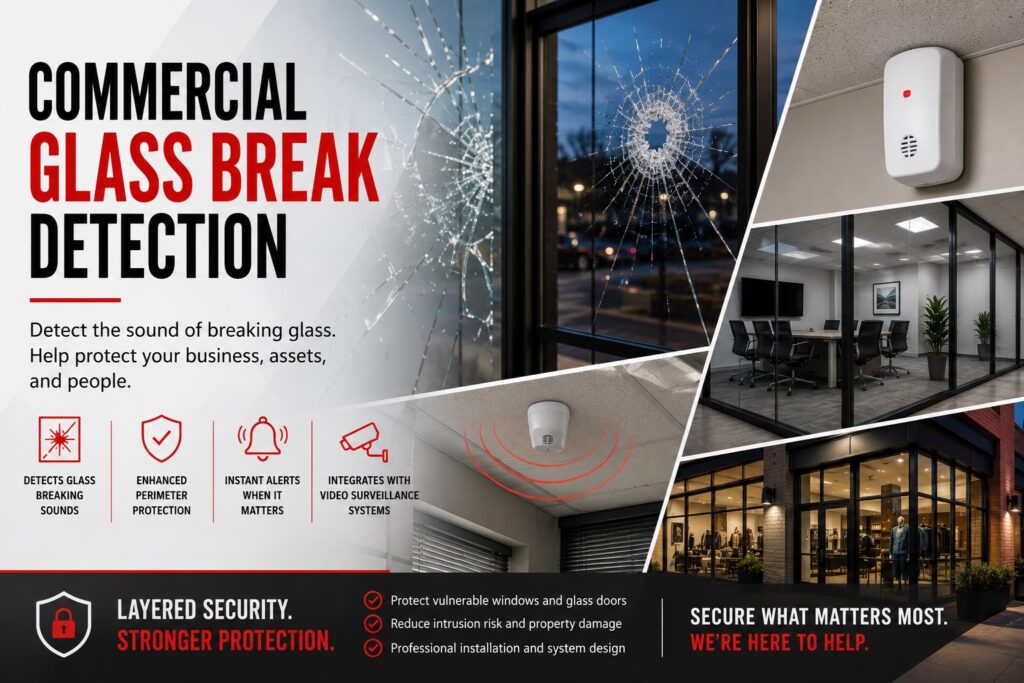
What Is Glass Break Detection?
Glass break detection is a method of monitoring windows, glass doors, display areas, and other glazed openings for conditions associated with breaking glass.
Depending on the application, a system may use:
- Acoustic glass break detectors
- Shock or vibration sensors
- Specialized surface-mounted detectors
- Combined perimeter and interior protection
Glass break detection is typically used as part of a broader commercial intrusion system rather than as a standalone form of protection.
Acoustic Glass Break Detectors
Acoustic glass break detectors are among the most common devices used in commercial applications.
These detectors are designed to recognize sound patterns associated with breaking glass.
A single properly located detector may be able to monitor multiple windows within its rated coverage area, depending on:
- Room size
- Ceiling height
- Window location
- Type of glass
- Detector specifications
- Interior acoustics
Detector placement is important because walls, partitions, furnishings, machinery, and other building features can affect performance.
Shock and Vibration Detection
Some applications may benefit from sensors that respond to vibration or impact rather than sound.
These devices can be mounted on or near protected glass or frames and may help identify physical attempts to break or attack a glazed opening.
Shock or vibration detection may be considered for:
- Storefront glass
- Display windows
- Sensitive interior areas
- High-value storage rooms
- Specialized commercial applications
The correct technology depends on the type of glass, building construction, and security objective.
Storefront and Retail Glass Protection
Retail storefronts often contain large areas of exposed glass that can be vulnerable after normal business hours.
Glass break detection can provide another layer of protection around:
- Front display windows
- Glass entry doors
- Side windows
- Rear office windows
- Interior display areas
When combined with door contacts and motion detection, glass break sensors can help create a more complete intrusion detection strategy.
Office and Corporate Facilities
Commercial offices frequently use large glass panels, sidelights, conference room glass, and exterior windows.
A perimeter alarm system that monitors only doors may leave these areas without direct detection.
Glass break protection can be considered in:
- Ground-floor offices
- Reception areas
- Executive offices
- Conference rooms
- Exterior-facing workspaces
- Sensitive records areas
The goal is to identify vulnerable openings without placing unnecessary devices throughout the building.
Warehouses and Industrial Facilities
Warehouses and industrial buildings may have fewer windows than offices or retail facilities, but vulnerable glazed areas can still exist around:
- Main entrances
- Office sections
- Guard stations
- Shipping offices
- Personnel entrances
- Interior administrative spaces
In these environments, detector selection should account for machinery, impact noise, loading activity, and other sources of sound or vibration.
Glass Break Detection and Door Contacts
Door contacts and glass break detectors protect different risks.
A door contact identifies when a protected door opens.
A glass break detector can help identify an attempt to enter through glass without opening the protected door.
Using both can provide better perimeter coverage in areas where doors and windows are close together.
Glass Break Detection and Motion Detection
Interior motion detectors provide another layer of protection after unauthorized entry occurs.
A layered intrusion system may use:
- Door contacts
- Glass break detectors
- Motion detectors
- Overhead-door contacts
- Specialty perimeter sensors
- Panic or duress devices
- Alarm monitoring
Each device serves a different role.
Glass break detection can help identify activity at the perimeter, while motion detection can help identify movement after entry.
Reducing Unwanted Alarms
Commercial glass break detectors should be selected and positioned carefully.
Potential environmental factors may include:
- Loud machinery
- Metal impacts
- Construction activity
- Loading dock noise
- Certain audio systems
- Hard reflective surfaces
- High ceilings
- Unusual room acoustics
A detector should not simply be installed because glass is present. The surrounding environment should be evaluated to determine whether the technology is appropriate.
Types of Glass Matter
Not all glass behaves the same way when broken.
Commercial properties may contain:
- Plate glass
- Tempered glass
- Laminated glass
- Wired glass
- Insulated glass units
- Specialty security glazing
Detector compatibility should be verified for the specific glass being protected.
The type, thickness, mounting, and construction of the glass can affect the performance of different detection technologies.
Protecting High-Value Interior Areas
Glass break detection may also be useful inside a facility.
Examples include:
- Display cases
- Interior storefronts
- Secure storage rooms
- Pharmacy areas
- High-value inventory rooms
- Restricted office areas
- Equipment enclosures
These applications may require more specialized sensor selection than standard exterior window protection.
Alarm Monitoring
When a glass break detector generates an alarm condition, the intrusion system can transmit the event according to the system’s programming and monitoring arrangement.
Depending on the installation, the event may:
- Sound local notification
- Identify the affected alarm zone
- Send a signal to a monitoring center
- Generate management notifications
- Be associated with nearby video surveillance
This can help provide additional information during an intrusion event.
Glass Break Detection and Video Surveillance
Security cameras can complement glass break detection by providing visual information about the protected area.
When alarm and video systems are integrated, an alarm event may help direct attention to cameras covering the affected space.
This can support:
- Event verification
- Incident review
- Investigation
- Remote response
- Identification of activity before and after the alarm
Video surveillance should supplement properly designed intrusion detection rather than replace it.
Planning Commercial Glass Break Protection
Before installing glass break detection, several questions should be considered:
- What type of glass is being protected?
- How large is the room?
- How far is the detector from the glass?
- Are there walls or partitions between the detector and windows?
- Is the space exposed to loud machinery?
- Are there multiple windows in the same area?
- Are the windows accessible from ground level?
- Is the area already protected by motion detection?
- Is professional alarm monitoring required?
These factors help determine whether acoustic, shock, vibration, or another method of protection is appropriate.
Layered Commercial Intrusion Protection
Glass break detection is most effective when used as part of a coordinated intrusion protection strategy.
Door contacts monitor openings.
Glass break detectors help protect glazed areas.
Motion detectors monitor interior movement.
Specialty sensors protect overhead doors, gates, and unusual openings.
Alarm monitoring helps communicate security events when a facility is unattended.
Facilities evaluating these protections can learn more about commercial alarm system installation from Northeast Remote Surveillance and Alarm.
Commercial and Industrial Applications
Glass break detection can be used in many types of properties, including:
- Retail stores
- Offices
- Warehouses
- Manufacturing facilities
- Schools
- Municipal buildings
- Healthcare facilities
- Financial offices
- Storage facilities
- Multi-building campuses
The system design should reflect the actual building, glass type, operating environment, and security requirements.
Planning a Commercial Intrusion Alarm System?
A professional security assessment can identify vulnerable glass areas, evaluate existing perimeter protection, determine the appropriate detector technology, and develop a coordinated intrusion detection strategy.
For more information about perimeter protection, monitoring, and commercial intrusion systems, visit Northeast Remote Surveillance and Alarm’s guide to commercial alarm system installation.